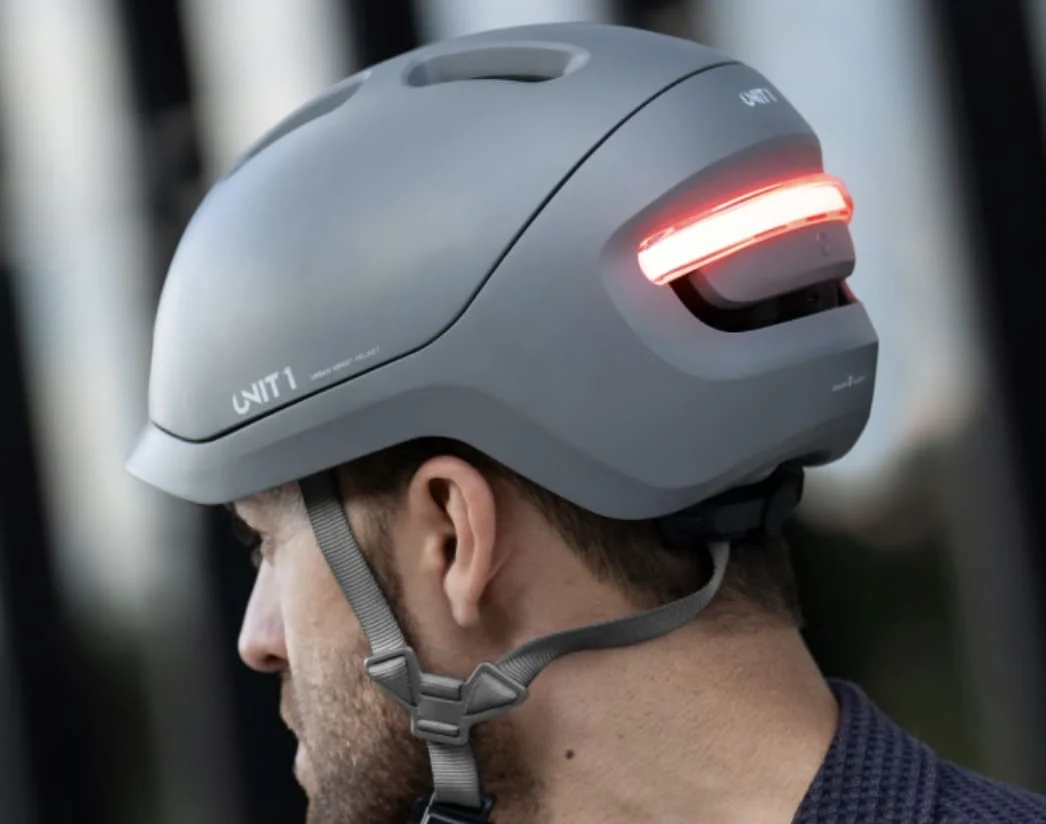
Traditional bicycle lights mounted on handlebars or seatposts suffer from a critical optical limitation in dense urban environments: low elevation. In bumper-to-bumper metropolitan traffic, handlebar lights are routinely obscured by SUV bonnets, delivery vans, and boot lids. Smart commuter helmets address this blind spot by elevating active LED lighting to driver eye level—approximately 1.6 to 1.8 metres off the asphalt—ensuring 360-degree visibility over traffic obstructions.
Today’s smart helmets go beyond simple blinking LEDs. Equipped with tri-axis accelerometers for automated deceleration warning, wireless handlebar-mounted turn indicators, and impact-rotation mitigating liners like MIPS, modern commuter headwear functions as an active safety hub for dense city corridors.
Key Safety Systems: What to Look For
When selecting a smart helmet for year-round urban transit, aesthetic styling matters less than mechanical durability and optical clarity. A commuter helmet must deliver reliable safety under three specific operational systems:
| Feature Category | Standard Basic Helmet | Integrated Smart Commuter Helmet |
|---|---|---|
| Sightline Elevation | Passive reflective tape (requires external headlights) | Active, elevated LEDs at motorist line-of-sight (1.6m+) |
| Deceleration Warning | None (motorists judge distance manually) | Integrated accelerometers triggering dynamic brake strobe |
| Turn Signaling | Manual hand signals (removing one hand from brake/bars) | Handlebar remote triggering amber directional LEDs |
| Rotational Safety | Standard EPS foam liner | MIPS, WaveCel, or KinetiCore rotational slip plane |
| Weather Ingress | Unregulated vents (rain enters scalp directly) | IPX5/IPX6 water-sealed electronics with seasonal covers |
| Weight Penalty | 240 g – 310 g | 380 g – 520 g (battery, logic boards, LED housing) |
Optical Ergonomics: Active Deceleration and Turn Signals
The standout mechanical benefit of modern smart helmets is the automated deceleration light. Integrated solid-state accelerometers monitor your forward velocity. The moment you pull a mechanical or hydraulic brake lever—or experience sudden deceleration on a hub-motor regenerative brake—the helmet’s rear red LED array shifts instantly from a steady pulse to an aggressive, solid-burst strobe.
This millisecond response time provides following motorists, bus drivers, and delivery vans with an unambiguous alert before you have brought the bike or scooter to a complete stop.
The Realities of Handlebar-Controlled Turn Indicators
Bar-mounted wireless remotes allow you to trigger amber directional arrow signals on the front and rear of the helmet with a single thumb press. While useful during night riding and early morning mist, directional helmet signals must supplement, rather than completely replace, standard hand signals:
- Driver Perception: Some drivers may not expect flashing amber lights at helmet height. Combining an extended arm signal with the active amber helmet strobe provides maximum legal protection in congested junctions.
- Tactile Feedback: Ensure the handlebar remote features tactile clicking or an audible chime. Without acoustic or physical feedback, it is easy to leave a turn signal blinking indefinitely after completing a turn.
Rotational Impact Protection: MIPS vs Standard EPS
Active electronics should never come at the expense of baseline kinetic protection. When a cyclist strikes the road surface, the impact almost always occurs at an angle rather than a direct perpendicular force. This angled impact creates violent rotational acceleration in the brain tissue—the primary cause of concussions and severe traumatic brain injuries (TBIs).
Look specifically for helmets equipped with a certified rotational protection liner, most notably MIPS (Multi-directional Impact Protection System):
- A low-friction layer sits between the helmet shell and the rider’s head, engineered to slide 10 to 15 millimetres in any direction upon angled contact.
- This split-second rotational slide redirects rotational forces away from the brain, mitigating the peak rotational velocity delivered to the skull.
- Never purchase an unbranded smart helmet from generic dropshipping portals that bundles LED lights into cheap EPS foam without third-party laboratory certifications (such as CE EN 1078 for Europe or CPSC in North America).
Real-World Battery Lifecycle & Charging Protocols
An electronic helmet is only effective if it remains charged for your return commute. Modern commuter smart helmets house rechargeable lithium-polymer cells ranging from 800 mAh to 1800 mAh.
Run Time vs. Ambient Temperature
Under mild spring conditions (15°C to 20°C), quality models like the Lumos Ultra or Giro Ethos MIPS deliver between 4 to 8 hours of continuous illumination depending on flash mode intensity. However, in sub-zero winter temperatures, lithium-ion battery chemistry experiences internal resistance increases, cutting operational runtime by 20% to 35%. For daily winter commuting, budget on recharging the helmet twice weekly.
Charging Hardware
Ensure the helmet utilizes a standardized USB-C port sealed behind a substantial rubber gasket rated at least IPX5. Proprietary magnetic pogo-pin chargers may offer sleek aesthetics, but losing a specialized charging cable at the office leaves you without elevated head illumination for your night ride home.
The Commuter Verdict
If you commute exclusively along segregated, off-street cycle highways in broad daylight, a lightweight traditional road helmet remains the lightest and coolest choice.
However, for metropolitan commuters navigating multi-lane arterial roads, negotiating roundabouts, and sharing wet tarmac with delivery fleets in dawn and dusk conditions, a smart commuter helmet with MIPS and integrated deceleration lighting is an invaluable safety upgrade. By projecting illumination directly into the driver’s natural visual horizon, it guarantees your presence on the roadway when standard bike lights are lost in the glare.