Covering more than 1,500 square kilometres across all 32 London boroughs and the City of London, the capital’s Ultra Low Emission Zone (ULEZ) operates as the world’s largest designated clean air corridor. For daily commuters and regional travellers approaching the capital from Surrey, Kent, Essex, or Hertfordshire, driving non-compliant vehicles into the Greater London administrative boundary triggers severe daily operating charges.
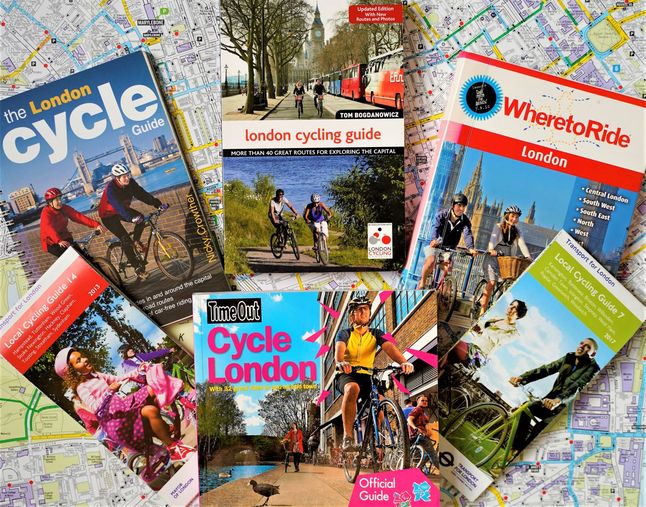
Rather than paying compounding daily access tariffs, modern commuters rely on an integrated multimodal strategy: parking outside the M25 or at outer orbital rail terminuses, boarding high-capacity National Rail or Elizabeth Line services, and deploying lightweight folding bikes or hire cycles along Transport for London’s (TfL) rapidly expanding segregated Cycleway network.
Understanding London’s Three-Tiered Charging Matrix
London enforces three distinct, overlapping vehicular access schemes. Conflating these zones leads to unexpected penalty charge notices (PCNs):
| Scheme Name | Geographic Boundary | Operating Hours | Daily Charge (Non-Compliant) |
|---|---|---|---|
| Congestion Charge (CC) | Central London only (Inner Ring Road) | 07:00 – 18:00 (Mon–Fri), 12:00 – 18:00 (Sat–Sun) | £15.00 per day |
| Ultra Low Emission Zone (ULEZ) | All 32 London Boroughs out to Greater London boundary | 24 hours a day, 365 days a year (excluding Christmas Day) | £12.50 per day (midnight-to-midnight) |
| Low Emission Zone (LEZ) | Greater London perimeter | 24 hours a day, 365 days a year | Applies exclusively to heavy HGVs, buses, coaches, and large vans (£100–£300/day) |
Crucial Commuter Detail: The ULEZ charge runs on a calendar-day basis (midnight to midnight). If you enter an outer borough at 23:45 and depart at 00:30, your vehicle crosses two operational windows, triggering two distinct £12.50 charges (£25.00 total) if non-compliant.
Vehicle Compliance Criteria
TfL enforces compliance via an extensive network of automated number plate recognition (ANPR) camera gantries. Standards depend on engine classification rather than age directly:
- Petrol Passenger Cars & Vans: Must meet minimum Euro 4 standards (generally vehicles registered with the DVLA from January 2006 onward, though select compliant models date back to 2001).
- Diesel Passenger Cars & Vans: Must meet minimum Euro 6 standards (generally light passenger vehicles registered from September 2015 onward). Older diesels manufactured between 2006 and 2014 fail ULEZ standards almost universally.
- Motorcycles & Scooters: Must meet minimum Euro 3 standards (generally registered after July 2007).
- Foreign-Registered Vehicles: Non-UK vehicles must be manually registered with TfL’s processing agent (EPC plc) prior to travel to verify emissions credentials, even if fully Euro 6 compliant; unverified foreign plates are billed automatically as non-compliant.
The Strategic Intermodal Interchange (P+R + Rail)
Navigating central London in any private car—even a zero-emission EV—incurs extreme congestion delays, street parking rates reaching £4.50 to £8.00 per hour, and the central £15 Congestion Charge. The optimal commuter route pairs strategic outer parking with high-capacity rail lines:
1. The Elizabeth Line Corridor (East–West Axis)
Commuters approaching from the west (M4/M40) can park at major outer terminuses like Reading or Maidenhead (outside the ULEZ boundary entirely) or West Drayton, taking the high-frequency Elizabeth Line straight into Paddington, Farringdon, or Canary Wharf in 25 to 35 minutes.
2. The Southern National Rail Gateways
From the south (M23/M25), stations such as East Croydon or Epsom provide frequent National Rail connections into London Victoria and London Bridge every 5 to 8 minutes, completely bypassing South London’s arterial 20 mph speed restrictions.
3. The Northern Radial Links (M1 / A1 Corridors)
Stations like Stanmore (Jubilee Line terminus) or High Barnet (Northern Line) sit inside the northern borough rim. Alternatively, parking outside the ULEZ at Potters Bar or St Albans allows direct Thameslink transit into the City of London in under 22 minutes.
Last-Mile Integration: London’s Cycleway Network
Once arriving at mainline terminal stations (Waterloo, Euston, King’s Cross, London Bridge, or Liverpool Street), active micro-mobility delivers significantly faster transit times to secondary office districts than crowded deep-tube lines like the Northern or Central corridors.
High-Capacity Cycleways (C-Routes)
London’s Cycle Superhighways—now unified under the numbered Cycleways brand—provide physically segregated bidirectional lanes separated from vehicular traffic by concrete kerbs:
- Cycleway 1 (C1): Connects Liverpool Street northward through Dalston and Stoke Newington.
- Cycleway 3 (C3): Runs uninterrupted east-to-west from Barking and Canary Wharf, passing the Tower of London, along the Victoria Embankment, directly through Parliament Square to Hyde Park.
- Cycleway 6 (C6): The crucial North-South arterial route connecting King’s Cross through Farringdon, across Blackfriars Bridge, and down to Elephant & Castle.
Carriage Rules: Folding Bikes vs. Full-Size Cycles
To commute efficiently across TfL networks, riders must adhere to distinct carriage regulations:
- Fully Folding Bicycles (Brompton, Tern, etc.): Permitted on all transport modes across Greater London—including the London Underground, Overground, DLR, Elizabeth Line, and TfL buses—at all times, seven days a week, with zero peak-hour restrictions, provided they remain fully collapsed and carried safely without obstructing doors or walkways.
- Non-Folding Bicycles: Strictly banned on subterranean tube sections and banned from mainline trains and surface rail arriving into London between 07:30 – 09:30 and departing London between 16:00 – 19:00 (Monday to Friday).
- Santander Cycles (Public Bike Share): With over 800 docking stations and 12,000 bicycles (including electric assist models), docking a Santander cycle eliminates the need to transport a personal bicycle on overcrowded morning commuter trains.
Commuter Action Plan for London Entry
- Verify DVLA / TfL Registration: Run your registration mark through TfL’s online vehicle checker before driving within the M25 ring.
- Avoid the Auto-Pay Trap: If your vehicle is non-compliant, register for TfL Auto Pay to eliminate accidental £180 non-payment penalty charges.
- Invest in a Quality Folder: A 16-inch or 20-inch folding bike remains the undisputed king of London multimodal commuting, unlocking the entire National Rail and Underground network during peak hours.
- Use Contactless for Multimodal Connections: Never buy paper travelcards. Tapping a contactless bank card or smartphone on TfL validators guarantees automated daily and weekly fare capping across zones 1–6.